Product Design · Treinta · 2026
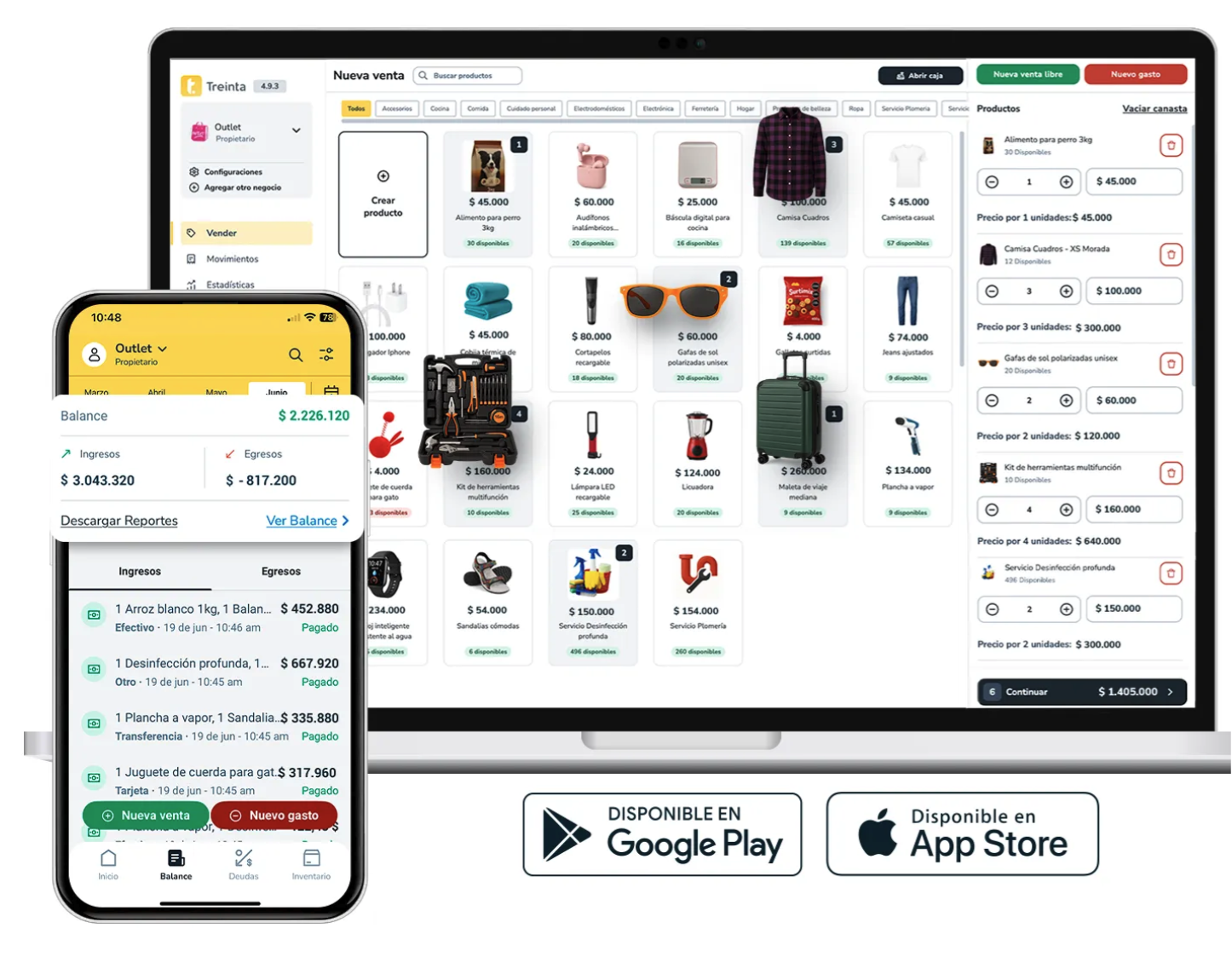
Gamifying inventory counting for small merchants
A card-based, swipe-driven inventory count that replaced a slow manual process small merchants kept avoiding.
- Role
- Senior Product Designer
- Duration
- 2 months
- Tools
- Figma · UserTesting · Maze · Ideation Framework
Impact & results
- ~85% initial adoption rate in usability testing
- Reduced time per inventory cycle
- Higher process adherence and consistency
- Increased product usage frequency
The challenge
Small retail businesses managed inventory through fully manual counting processes, verifying products one by one against inflow and outflow records. High time investment per cycle, low process adherence and frequent stock inconsistencies meant inventory counts were often postponed or skipped.
The solution
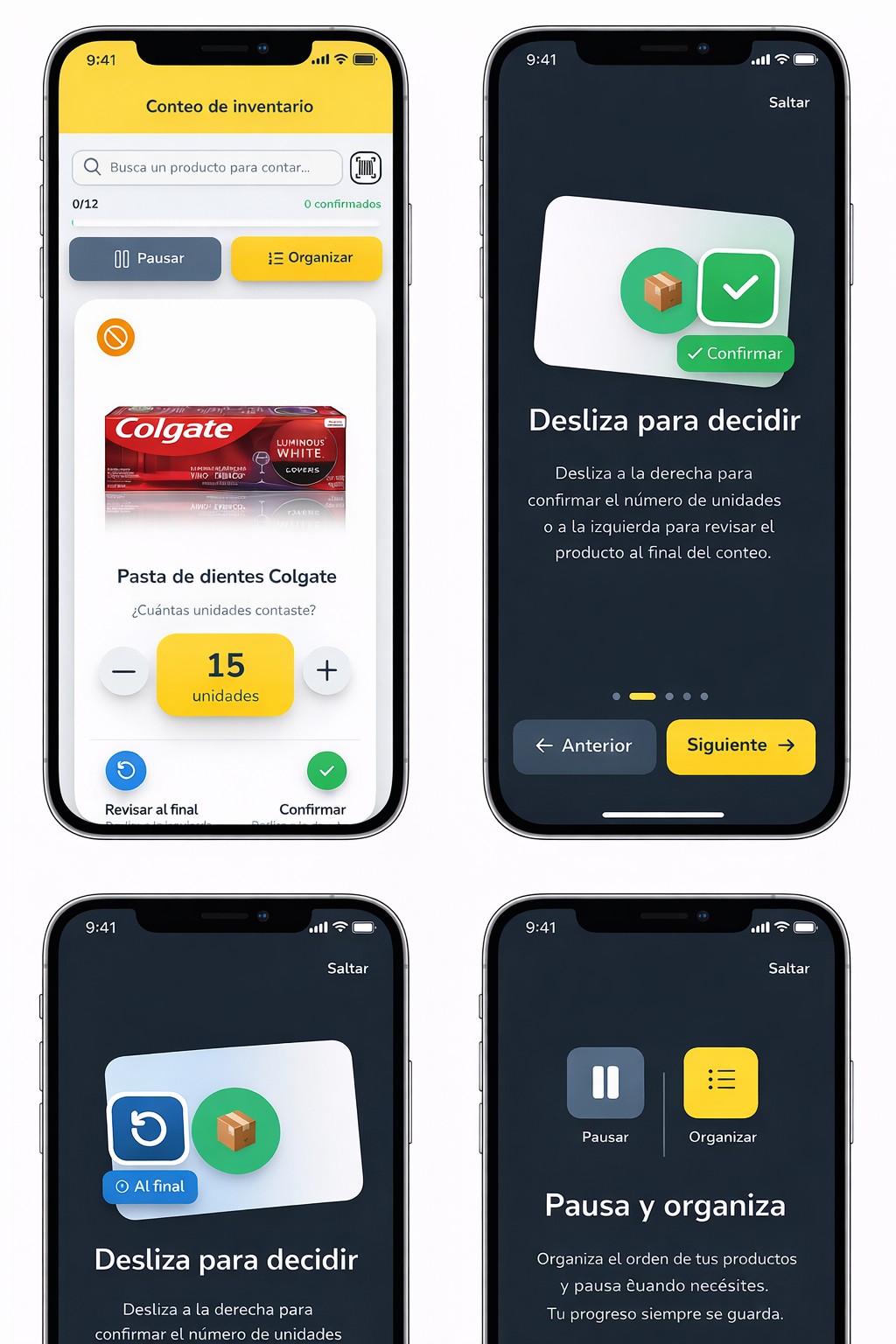
A gamified, card-based counting experience using swipe gestures (right to confirm, left to review later) and a user-defined counting order that matches each merchant's physical store layout, cutting interaction friction and cognitive load.
The Redesigned Flow
The gamified, card-based counting screen: swipe right to confirm, swipe left to review later.
The full process
- 1
Main Challenge — Manual Inventory Control Was Slow and Avoided
Small retail businesses managed inventory through fully manual counting processes. Merchants had to verify products one by one and reconcile quantities against inflow and outflow records.
Core Problems
- High time investment per inventory cycle
- Low process adherence due to effort and fatigue
- Frequent stock inconsistencies
- Poor real-time inventory visibility
- Inventory counts were often postponed or skipped
- 2
Market Gap — Existing Digital Solutions Did Not Fix the Root Problem
Most solutions in the market only digitized the physical inventory form instead of redesigning the interaction model.
Limitations Detected
- Same manual workflow replicated on screen
- Long sequential product lists
- Continuous product-by-product searching
- High cognitive load remained
- No real time-saving interaction improvements
Digitization without interaction redesign did not remove the operational friction.
- 3
Research — Merchant Interviews and Workflow Observation
We conducted qualitative interviews with small merchants managing medium and large inventories to understand real behaviors and constraints.
Actions Executed
- Interviewed multiple merchant profiles
- Observed real counting workflows
- Documented step-by-step processes
- Identified friction and abandonment triggers
- Synthesized behavioral insights
Key Insight
The main barrier was interaction friction and process fatigue, not lack of awareness.
- 4
Behavioral Insight — Counting Order Is Consistent but Personal
Merchants usually count products in a consistent sequence, but each merchant follows a different order based on store layout and habits.
Insight Implications
- Fixed product lists increase search time
- Reordering mentally adds cognitive load
- Mismatch between digital order and physical flow slows execution
- Personalized counting order can reduce total counting time
- 5
Ideation — Gamification and Interaction Model Redesign
A structured ideation workshop was led to reduce interaction cost using gamification and familiar gesture models.
Actions Executed
- Facilitated cross-functional ideation session
- Explored game and social swipe patterns
- Evaluated low-friction confirmation models
- Rapidly tested multiple concepts
- Selected swipe-card interaction as primary approach
- 6
Solution — Gamified Card-Based Counting + Personalized Order
A gamified inventory counting experience was designed using product cards, swipe gestures, and user-defined counting order.
Card-Based Counting Flow
- Each product displayed as a card
- Card shows expected stock quantity
- One-step validation interaction
- Swipe right = confirm quantity
- Swipe left = review later
- Skip button = remove from current cycle
- Inline fast quantity editing
Personalized Counting Order
- User defines preferred counting sequence
- Sequence matches physical store route
- Order is saved and reused
- Eliminates repeated searching
- Reduces counting time
- Improves organization and consistency
Design Principles Applied
- Familiar gestures
- One-action decisions
- Reduced cognitive load
- Continuous progress feedback
- Workflow personalization
- 7
Validation — Usability Testing Results
The solution was validated through usability testing with target merchants.
Results
- ~85% initial adoption rate
- High task understanding without training
- Low learning curve
- Faster counting sessions
- Increased willingness to perform regular inventory checks
- 8
Outcome — Impact on User and Business
User Impact
- Reduced time per inventory cycle
- Lower effort perception
- Higher process adherence
- More consistent stock control
Business Impact
- Higher feature adoption
- Increased product usage frequency
- Stronger operational value perception